Implementation phases
Ireland is taking a phased approach to the implementation of eInvoicing. This is to give businesses time to prepare, transition and adapt before the European Union’s (EU’s) VAT in the Digital Age (ViDA) deadline.
From Phase One, all businesses are required to be enabled to receive eInvoices from any supplier required to issue them.
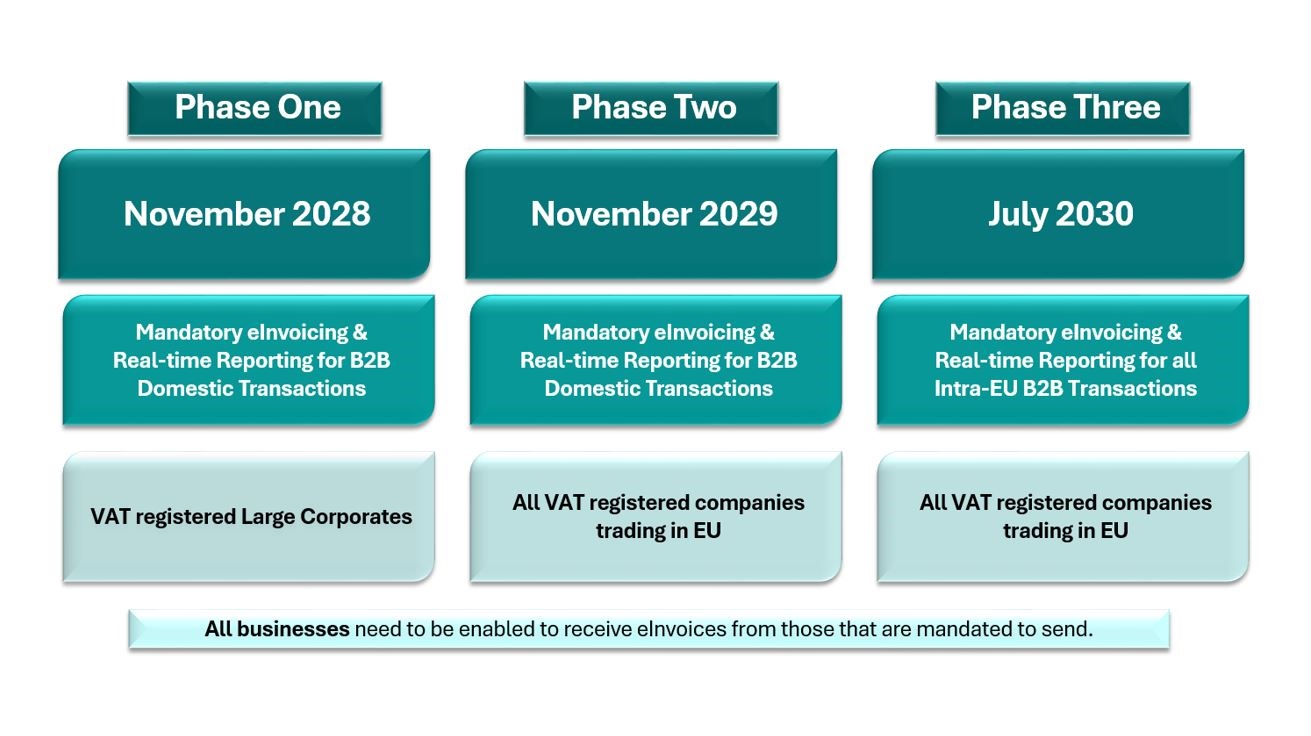
Phase One (1 November 2028)
Value-Added Tax (VAT) registered large corporates will be required to implement mandatory eInvoicing and real-time reporting for taxable domestic business to business (B2B) transactions.
All businesses are required to be able to receive eInvoices from this date.
Phase Two (1 November 2029)
The domestic obligation to implement mandatory eInvoicing and real-time reporting for taxable domestic B2B transactions extends in this phase. It will impact VAT registered businesses engaging in cross border EU B2B trade with zero-rate goods or the reverse charge services VAT arrangements.
This phase provides these businesses with time to familiarise themselves with the new arrangements domestically before the EU-wide system (ViDA) becomes mandatory.
Phase Three (July 2030)
Full implementation of EU ViDA requirements for all cross-border EU B2B transactions becomes mandatory across all Member States. Irish businesses already operating under the domestic system will transition to meet these EU obligations.
Revenue recognises the significant change this represents for Irish businesses and is committed to providing comprehensive support and engagement throughout the transition.
Phase roadmap
The table below, outlines how businesses are impacted for eInvoicing and digital reporting for each phase of the domestic implementation of eInvoicing.
Mailing list
Subscribe to our mailing list to receive all the latest information and updates on the implementation of eInvoicing in Ireland